Trash chutes offer a simple, efficient way to handle waste in many apartment buildings. But one component of this system tends to be neglected: the trash chute door itself. Many homeowners don’t consider that these doors can accumulate germs, unpleasant smells, and dirt from everyday use.
These doors serve as the gateways for residents to dispose of their waste, directing it into the building’s trash chute. Because they’re used so often and come into direct contact with refuse, these doors can get filthy. If they’re not cleaned on a regular basis, they could even pose a health risk.
Regular cleaning and inspection of trash chute doors are essential for a healthy environment.
When these doors are overlooked and grimy, they can easily become havens for bacteria, generate foul smells, and, if left unattended, pose safety hazards.
This guide will outline the suggested cleaning and inspection schedules for trash chute doors, the significance of consistent upkeep, and practical tips for homeowners to ensure their building’s waste disposal system remains safe and sanitary.
The Importance Of Cleaning Trash Chute Doors
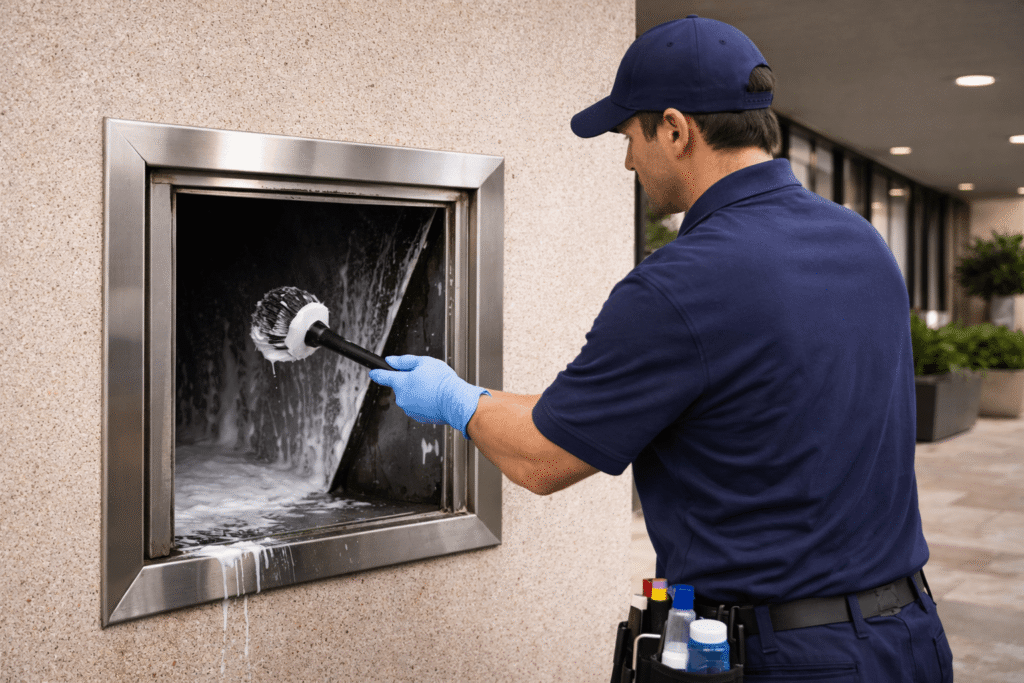
Trash chute doors get a lot of use; they’re among the most frequently touched surfaces in shared residential areas.
Each time someone tosses out their trash, they inevitably touch the door handle or surface.
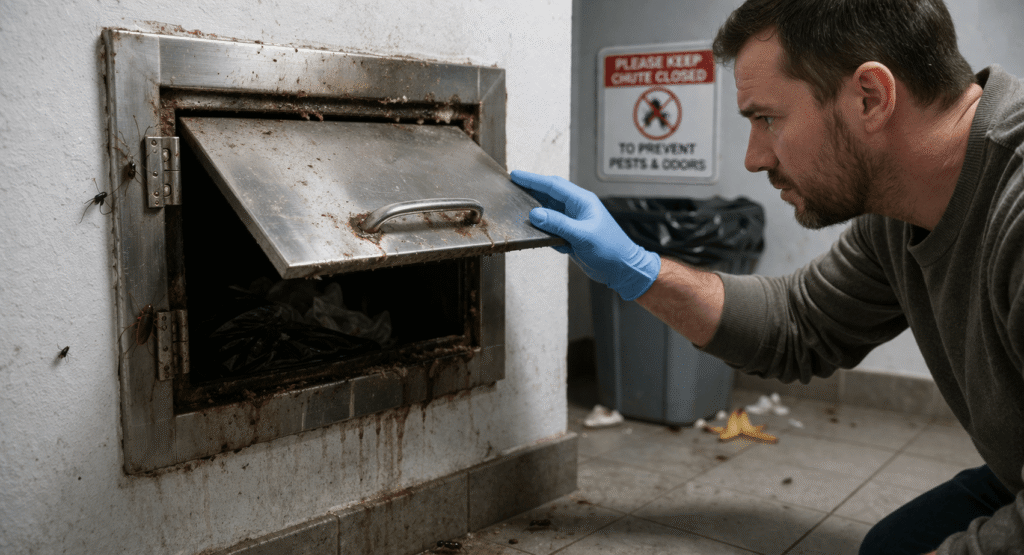
Neglecting routine cleaning and inspections can quickly turn trash chute doors into havens for bacteria and germs.
Release foul odors that permeate the hallways.
Attract unwelcome guests, much like flies or cockroaches.
Sustained damage or the potential to become dangerous as time passes.
Consistent upkeep keeps the trash disposal system clean, operational, and safe for all building occupants.
How Often Should Trash Chute Doors Be Cleaned?
The ideal cleaning schedule varies based on the building’s nature and the chute’s usage rate.
Daily Cleaning For High-Traffic Buildings
In apartment complexes or condominiums with heavy usage, trash chute doors should be cleaned daily. This helps to stop the accumulation of dirt, leftover food, and harmful bacteria.
Daily cleaning usually involves:
- Wiping down the surfaces of the doors.
- Sanitizing handles and other areas that people touch.
- Getting rid of any visible dirt or spills.
Regular cleaning is key to preventing bad odors and maintaining a sanitary environment in shared spaces.
Weekly Cleaning For Smaller Residential Buildings
In smaller residential buildings with fewer residents, the doors to trash chutes might only require deep cleaning once a week.
This means:
- Disinfecting the surface of the door.
- Cleaning the frame and the walls around it.
- Removing any debris that might be stuck.
Even with less frequent use, weekly cleaning is essential for keeping the system hygienic and free of unpleasant smells.
Monthly Deep Cleaning
At least once a month, a more thorough cleaning should be performed. Getting the door surface clean is the first step.
Sanitizing every part is next.
Hinges and door seals need a look, too.
And don’t forget to clear away any gunk around the edges.
Regular deep cleaning, done monthly, is key to keeping things clean and lasting.
How Often Should You Check Those Trash Chute Doors?
Cleaning keeps them sanitary, but inspections are what keep them safe and working.
Quarterly Safety Inspections Are The Way To Go
Every quarter, a review is necessary to identify any issues that might arise.
Inspectors need to pay attention to:
- Hinges that are coming loose.
- Handles that are broken.
- Damaged seals.
- Doors that won’t close right.
Catching these things early can save you from costly repairs down the line.
Annual Professional Inspections
A yearly professional inspection is a good idea. Skilled technicians can assess several key areas:
- Door alignment.
- Compliance with fire safety regulations.
- The condition of mechanical components.
- The effectiveness of door closure mechanisms.
These inspections verify that everything is up to code and meets safety standards.
Signs Your Trash Chute Doors Need Immediate Cleaning
Despite a consistent cleaning schedule, some telltale signs demand immediate attention.
Persistent Odors
When unwelcome scents linger close to the chute, it’s a clear indication that the door surfaces or the immediate vicinity need a thorough cleaning.
Visible Dirt Or Grease
Food remnants, sticky surfaces, or dark stains are obvious signs that cleaning has been overlooked.
Increased Pest Activity
Flies, ants, or cockroaches around the chute door may indicate accumulated food particles or waste. Addressing these issues quickly helps maintain a sanitary environment.
Practical Cleaning Tips For Homeowners
Homeowners can take simple steps to help keep trash chute doors cleaner between scheduled maintenance.
1. Use Trash Bags Properly
Always seal garbage bags tightly before disposing of them. This prevents spills and leaks that can dirty chute doors.
2. Avoid Overfilled Bags
Overfilled garbage bags can burst when dropped into the chute, creating mess and odors.
3. Wipe Spills Immediately
If garbage leaks onto the chute door, wipe it down as soon as possible to prevent stains and bacteria buildup.
4. Report Damage Quickly
If you notice a loose hinge, broken handle, or door that doesn’t close properly, notify building management immediately. Quick reporting is key to avoiding safety issues and expensive fixes.
More On Trash Chute Maintenance
Beyond just cleaning the doors, there are other steps you can take to keep the whole system functioning well.
Keep The Area Around It Clean
Trash chute rooms and hallways need to be kept clean to prevent smells and pests.
Get Professional Chute Cleaning
The chute shaft itself should be professionally cleaned a few times a year to get rid of grease and buildup.
Promote Resident Awareness
Teaching residents how to dispose of garbage properly helps cut down on mess and maintenance problems. Small habits from residents can make a big difference in maintaining cleanliness.
Conclusion
Maintaining clean and well-functioning trash chute doors is an essential part of keeping residential buildings sanitary and safe. Regular cleaning prevents bacteria buildup, unpleasant odors, and pest infestations, while routine inspections ensure the doors operate properly and remain compliant with safety standards.
For most buildings, trash chute doors should be cleaned daily or weekly depending on usage, inspected quarterly for safety, and professionally evaluated at least once a year. By following these simple maintenance practices, homeowners and building managers can help extend the lifespan of their waste disposal systems.
If your building needs professional cleaning or maintenance services, Working Hands & More provides reliable solutions to keep trash chute systems clean, safe, and operating efficiently.
FAQs
How often should trash chute doors be sanitized?
Trash chute doors should be sanitized at least once a day in high-use buildings and weekly in smaller residential properties.
Why do trash chute doors smell?
Odors usually occur when food waste, grease, or bacteria builds up on the door surface or inside the chute system.
Can homeowners clean trash chute doors themselves?
Yes. Homeowners or building staff can handle basic surface cleaning, though a professional touch is best for thorough sanitation.
What are the consequences of neglecting trash chute doors?
Failure to maintain these doors can create a breeding ground for bacteria, invite pests, produce unpleasant smells, and even create safety risks.
Do trash chute doors require professional inspection?
Yes. Regular professional inspections are key to confirming that doors both adhere to safety regulations and operate as intended.